Further Investigation of Electrostatic Electron Cyclotron Waves
Observed by the Plasma Wave Instrument on the Polar Spacecraft
J. D. Menietti, O. Santolik, J. D. Scudder, J. S. Pickett, D. A. Gurnett
We report the results of an investigation of waves observed by the
Polar spacecraft at high altitudes and latitudes and at frequencies
just above the cyclotron frequency. These observations are made frequently
when the spacecraft is over the polar cap as well as near the dayside cusp
and near the nightside auroral region, and for ratios of gyrofrequency to
plasma frequency, f_p/f_ce ~ 1. We investigate the role of electron beams
with E <~ 1 keV in the generation of these waves. Observed plasma parameters
are used as input to the WHAMP computer code to place contstraints on the
free energy source and growth of these waves.
WHAMP, Waves in Homogeneous, Anisotropic Multicomponent Plasmas by
Kjell Ronnmark [1982]
WHAMP is a computer program which solves the dispersion relation of
waves in a magnetized plasma. The dielectric tensor is derived using the
kinetic theory of homogeneous plasmas with Maxwellian velocity distributions.
Up to six different plasma components can be included (we use up to 3 in
this work), and each component is specified by its density, temperature,
particle mass, anisotropy and drift velocity along the magnetic field.
CLICK ON THE IMAGE FOR A FULL RESOLUTION (1024x768) GIF PLOT.
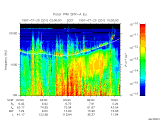
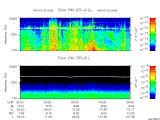
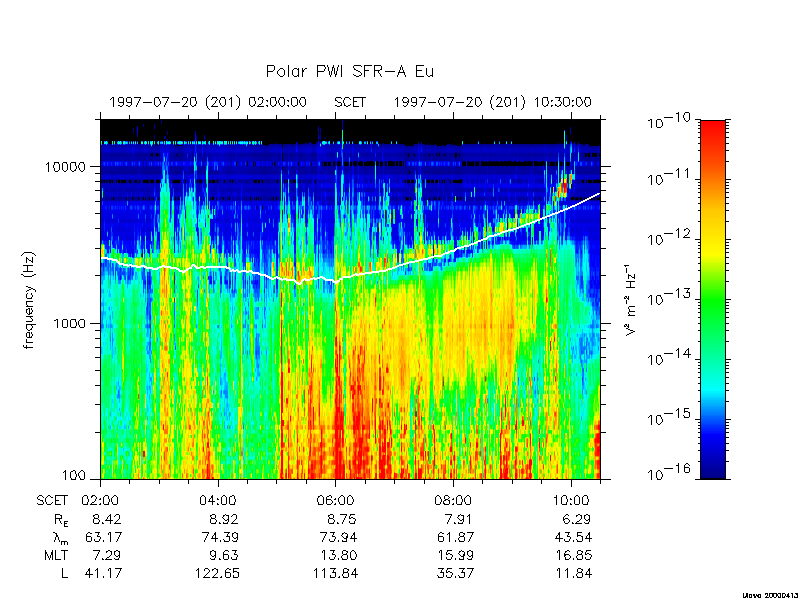
The following figures are f-vs-time spectrograms showing the intense
electrostatic emissions just above the electron cyclotron frequeny
 EEC
97/07/20
EEC
97/07/20
 EEC
97/07/20
EEC
97/07/20
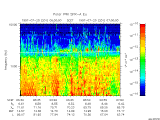
The following image is a higher resolution plot of electric field only for
the time period where low-energy electron beams are observed.
 EEC
97/07/20
EEC
97/07/20
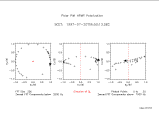
Following are high-resolution measurements of the electric field components
(field-aligned coordinates) obtained during the emissions.
 E-field
97/07/20
E-field
97/07/20
Following are contours of the velocity-space electron distribution function
(Hydra) observed during a time period when electrostatic electron cyclotron
waves were observed. Note the low-energy beams coming up the field line.
The blue dots are the actual data points.
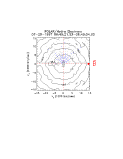 contour
97/07/20
contour
97/07/20
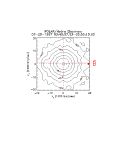 contour
97/07/20
contour
97/07/20
Contours of the velocity-space electron distribution function resulting
from a model of drifting Maxwellians.
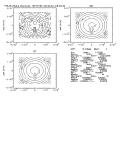 fit
97/07/20
fit
97/07/20
Results of the solution of the dispersion equation:
The coordinate of the plot is wave number (m^-1) and the three panels display
the real frequency (bottom), cB/E (middle), and the ratio of imaginery to
real frequency (top). In the bottom panel we display the non-growing
whistler mode and the electrostatic beam mode (f_ce < f < f_uh), which does
have a small but measurable imaginery frequency and thus growth rate.
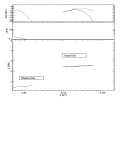 growth
97/07/20
growth
97/07/20
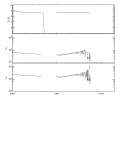
Following is a plot of the calculated ratio of Ex/Ez showing the nearly
linear polarization of the waves.
 Ex/Ez
97/07/20
Ex/Ez
97/07/20
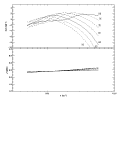
We have performed the calculations for a number of wave normal angles as
shown in the following plot. The wave growth is confined to angles between
about 50 degrees and 85 degrees.
 Psi
97/07/20
Psi
97/07/20
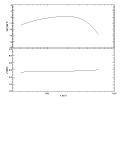
Following shows calculations of real and imaginery f for an electron
distribution function containing a beam with a parallel temperature about 10
times greater than used above (similar to the observed distribution within the
dayside auroral region). Note the positive growth of the waves.
 growth 97/07/20
SUMMARY
Electrostatic electron cyclotron waves are observed frequently just above
the cyclotron frequency, f_ce, for northern hemisphere passes of Polar and
are present along with low-energy (< 1 keV) electron beams. At Polar altitudes
we often find that f_p > f_ce.
Electron beam plasma distributions are modeled based on observations.
These distributions are input to the WHAMP dispersion solver. The calculations
indicate that at least some of the distributions are modestly unstable to
growth of electrostatic electron cyclotron waves on the beam mode. The waves
typically lie between f_ce and f_uh for a plasma with f_p >~ f_ce. A
preliminary search of parameter space indicates reasonable agreement with
observed plasma distributions for wave normal angles close to 75 degrees.
ACKNOWLEDGEMENTS
This research was supported by NASA through grants NAG5-7943 and NAG5-9561
with NASA/Goddard Space Flight Center.
 EEC
97/07/20
EEC
97/07/20 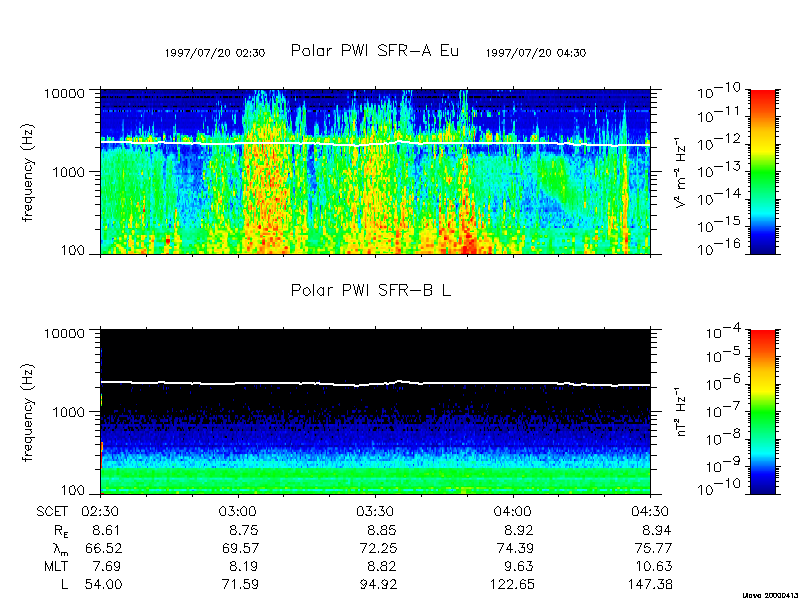 EEC
97/07/20
EEC
97/07/20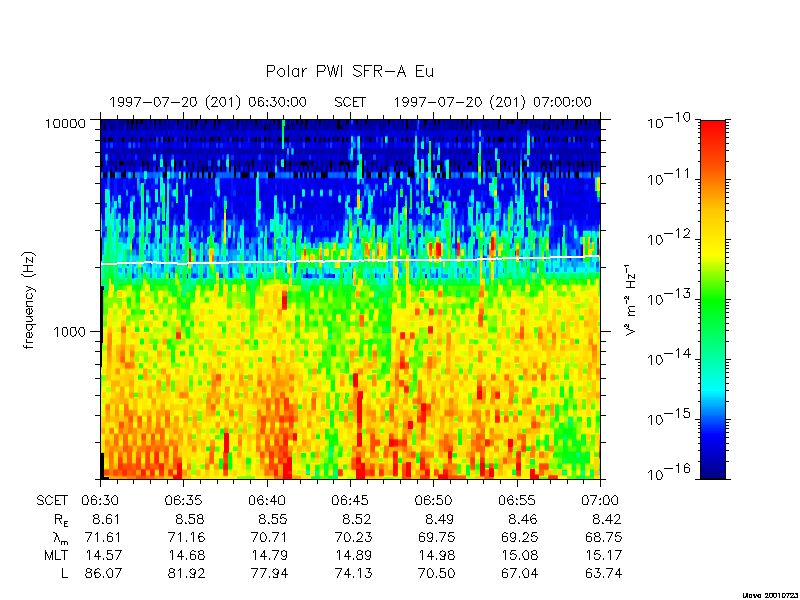 EEC
97/07/20
EEC
97/07/20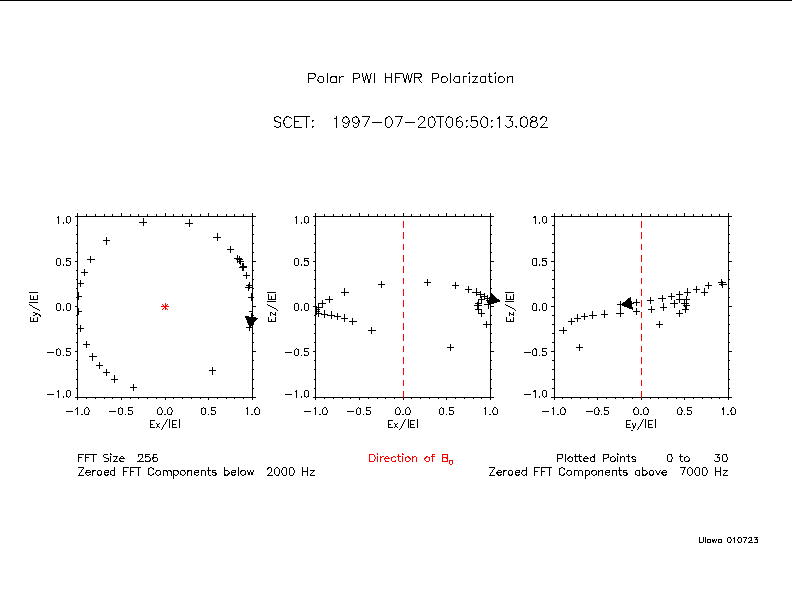 E-field
97/07/20
E-field
97/07/20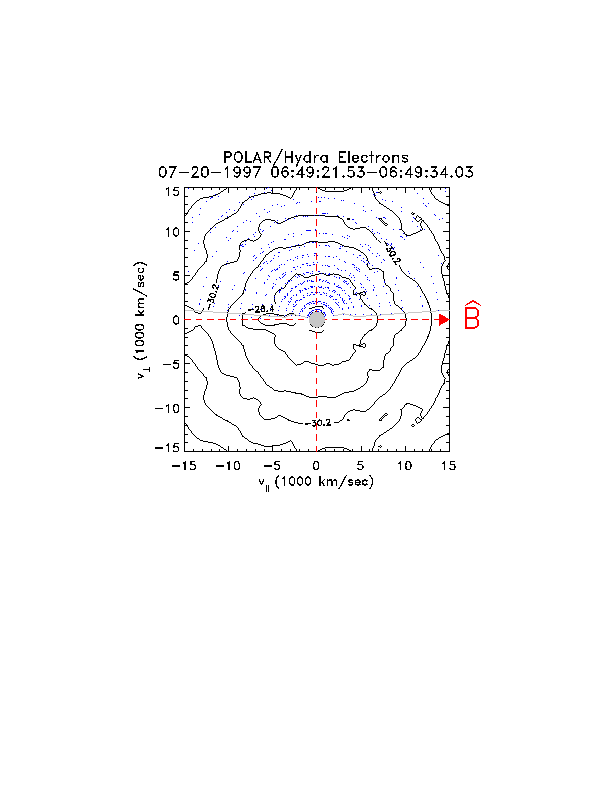 contour
97/07/20
contour
97/07/20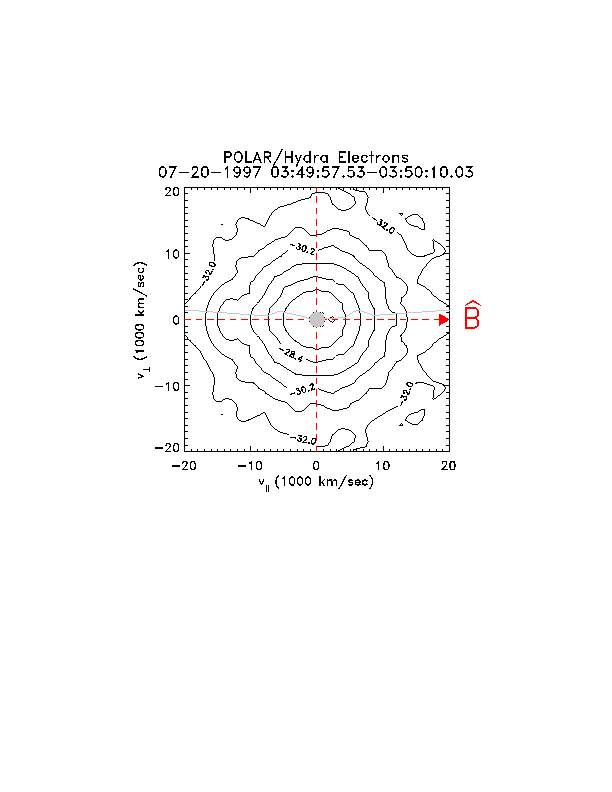 contour
97/07/20
contour
97/07/20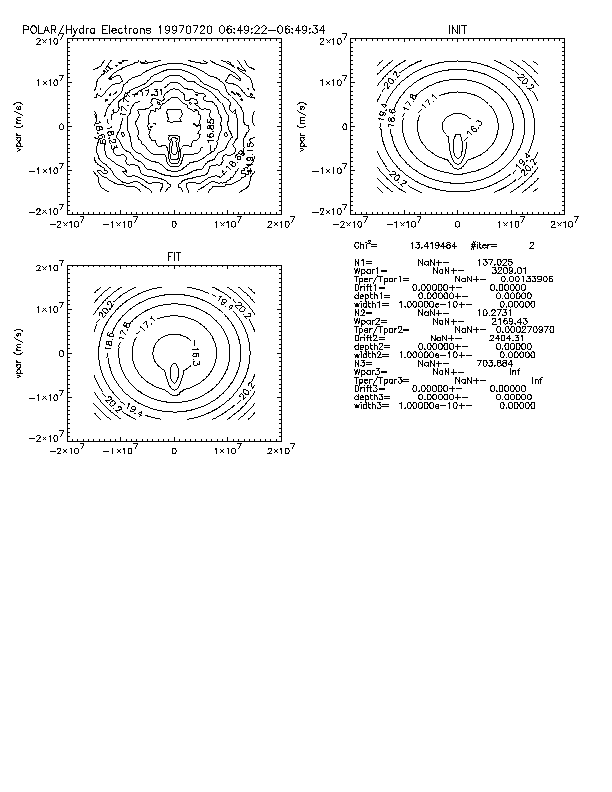 fit
97/07/20
fit
97/07/20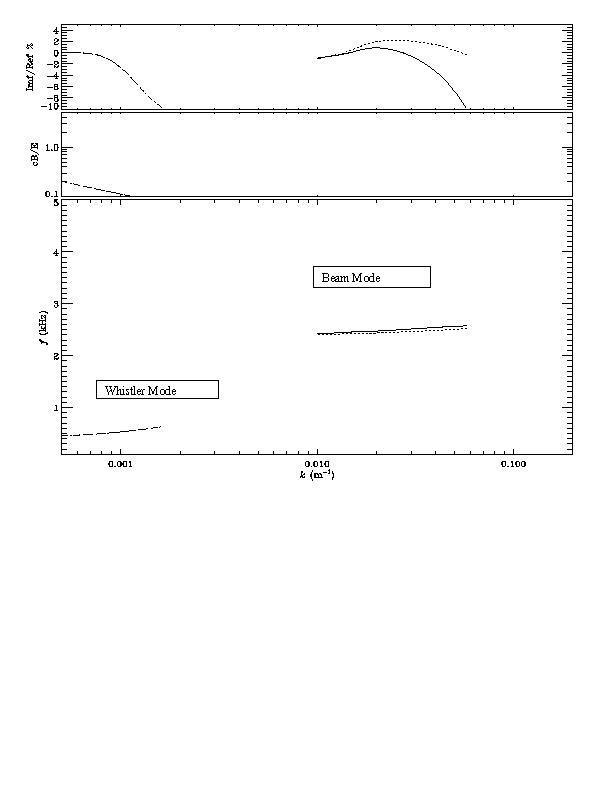 growth
97/07/20
growth
97/07/20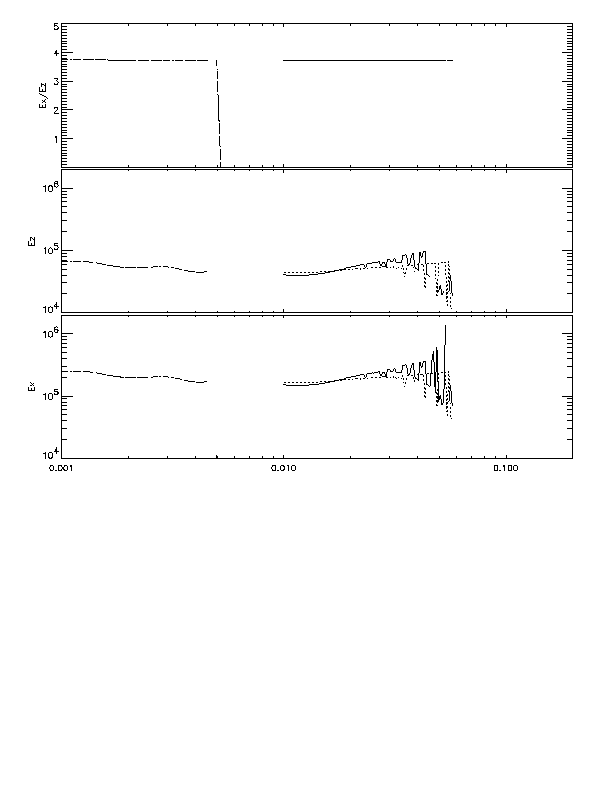 Ex/Ez
97/07/20
Ex/Ez
97/07/20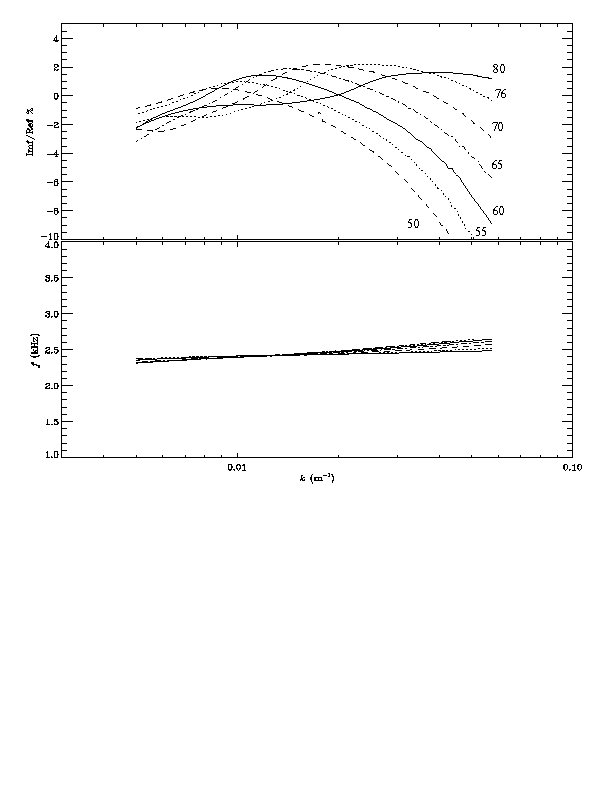 Psi
97/07/20
Psi
97/07/20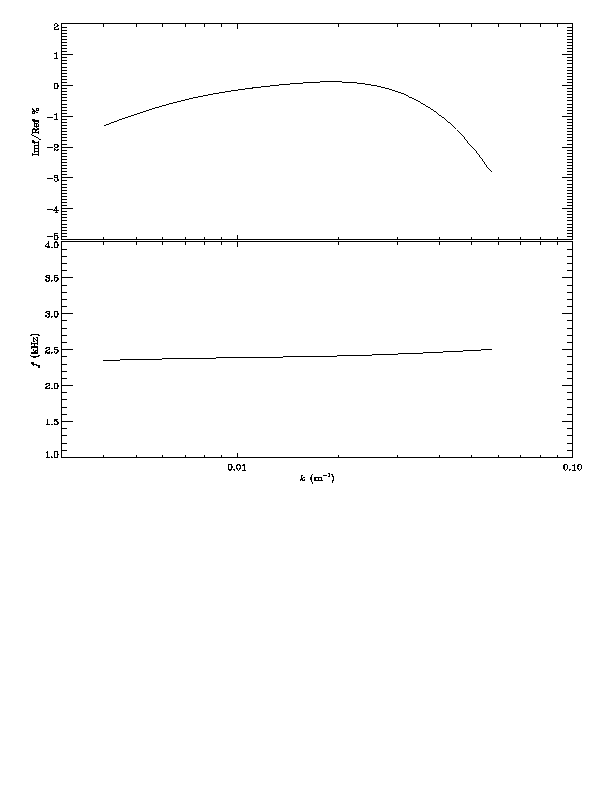 growth 97/07/20